



The past, present and future of DEKALB: How a centurion brand became even stronger with Bayer

For generations, one seed brand has stood apart: DEKALB. It has delivered premium performance, especially in corn, for more than a century. This is incredible – but it also raises questions about how we support it today. How do you work effectively with a brand that has been alive far longer than you have? How can we preserve DEKALB’s long heritage while ensuring it moves with the times and provides a platform for growth? And how do the Bayer and DEKALB brands work together? With a dedicated global team behind the brand, we have the answers.
THE PAST: a brand built for the long term, since 1912
Today, the name DEKALB stands for high performance in the field. But at the start, it almost stood for the opposite. Residents of DeKalb County, Illinois, were concerned about reducing corn yields. They founded the DeKalb Agricultural Association in 1912 to research improvements and advise farmers. Soon, they were looking into seeds – and resolved to breed new varieties that offered increased yield and early maturity.
This wasn’t a quick fix – it was a long-term endeavor. But it paid off. In 1924, DeKalb AgResearch released a breakthrough variety, and started work breeding corn hybrids. By 1936, the hybrid’s results were so good that it was declared a “mortgage lifter” for farmers. To illustrate this, the association ran DEKALB adverts depicting an ear of corn with two wings. That was the birth of the ‘winged ear’ logo that is so iconic today – symbolizing not just a crop, but a way of life.
From there, the brand enjoyed 40 years of leadership in the US corn seed market. It expanded to more countries and more crops. Then, it changed hands – first in a joint venture with Pfizer in the 1980s, then spun off into DeKalb Genetics Corporation, then bought by Monsanto – before joining Bayer in 2018. Throughout periods of change, it didn’t just survive: it grew even stronger.
It’s an exceedingly valuable brand, but also an amazingly consistent one – and we take care of it today to continue its story.
THE PRESENT: Why is DEKALB bigger than ever today?
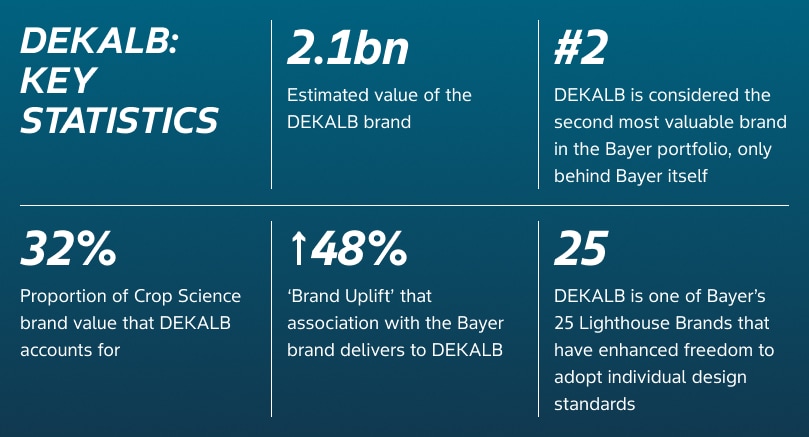
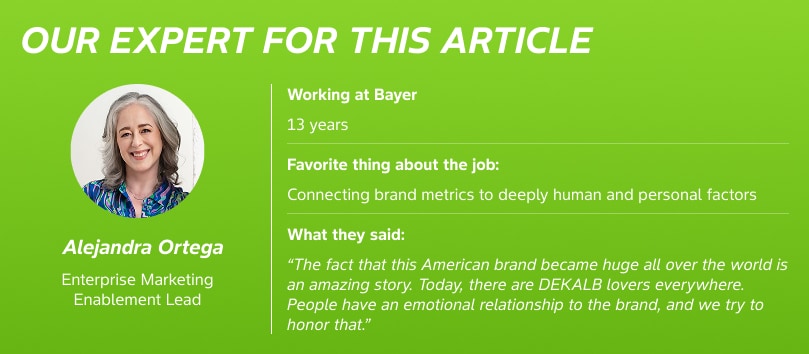
DEKALB is a brand with a 113-year heritage and a ten-figure value. Does that make it daunting to work with? Not really, says Alejandra Ortega, who oversees performance and development for our global seeds and traits brands: it’s more like a powerful confidence boost. “This is a brand with global presence. And wherever you look in the world, it is always perceived in the same way: as a brand that brings you performance and innovation. Plus, the DEKALB logo is highly identifiable everywhere. The wings and the DEKALB typography resonate with farmers globally.
“Of course, there is a strong heritage component, especially in the US – but we don’t stop with that. We show farmers what DEKALB can do for them today.”
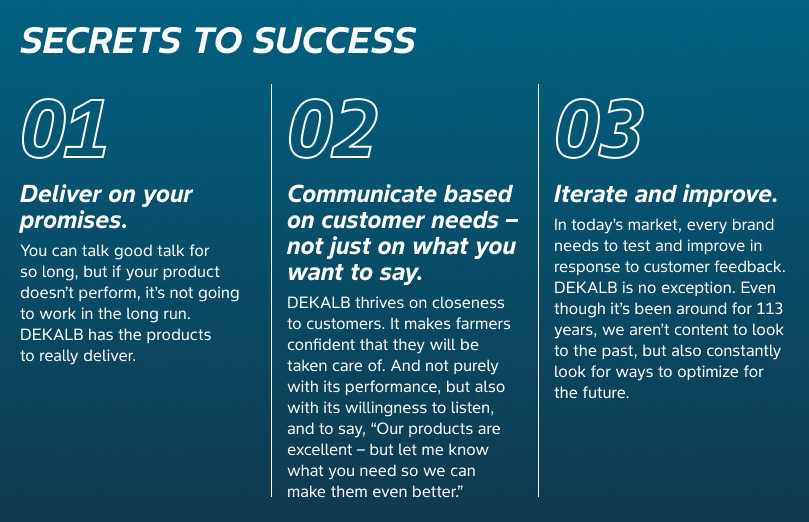
To achieve that, we balance consistency with flexibility: ensuring we honor and preserve its key elements but are not so rigid that we prevent it from evolving. Alejandra calls this approach ‘freedom within a frame’. “We have a global framework with the pillars for DEKALB’s brand positioning: confidence, innovation, performance. And we have guidance on the content areas that can reinforce these pillars. From here, we say to marketing colleagues: ‘Please work with these pillars everywhere – but you can change the messages to suit your local market.’”
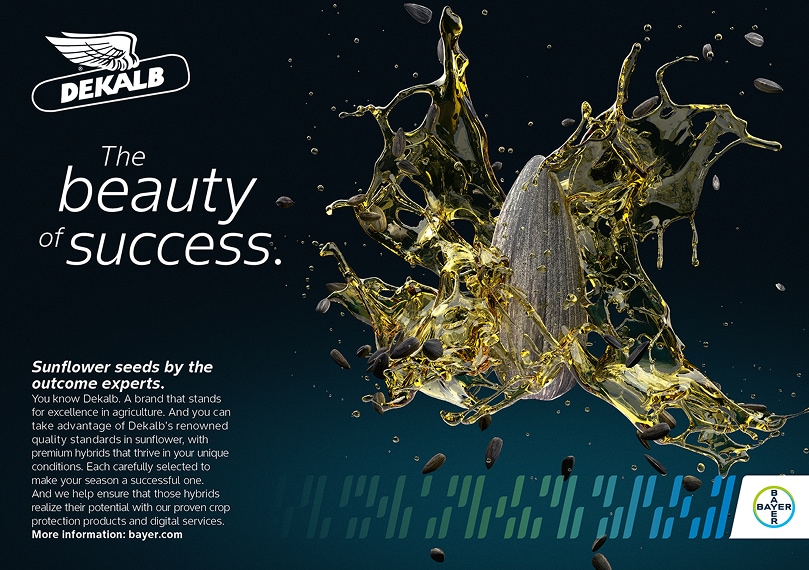
By emphasizing creative freedom, DEKALB can always evolve and be a driving force for change. One recent example is the incorporation of the Code Design into DEKALB’s visual language. This enables us to put a new ‘twist’ on the DEKALB look-and-feel – perhaps by adding Code elements or by using a white, blue or outline-only logo. It’s a different approach. It’s fresh. But it’s still unmistakably DEKALB. “This is a way for the DEKALB and Bayer brands to get closer together – but at the same time, ensure DEKALB has freedom to express itself individually,” says Alejandra.
THE FUTURE: DEKALB and Bayer drive each other further
Alejandra has hinted at something essential: the interaction between the DEKALB and Bayer brands. When you unite two brand ‘giants’, each with a long history and a reputation for innovation, it’s not about one taking the lead – it’s about enabling them both to shine together.
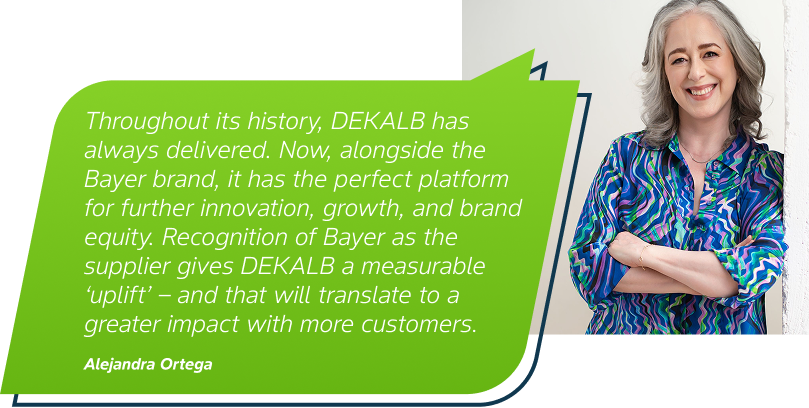
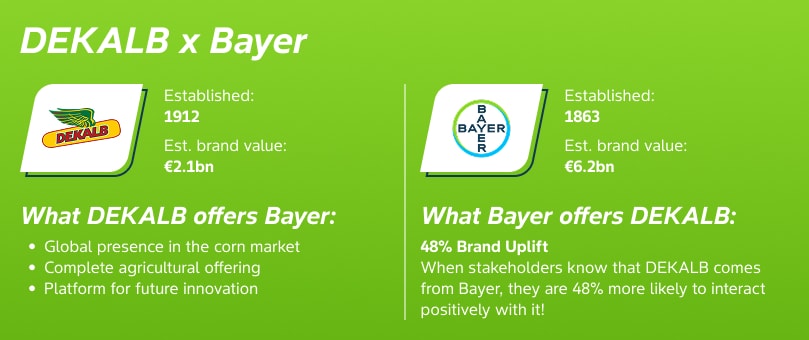
“On the one hand, the addition of DEKALB transformed Bayer’s agricultural offering – ‘completing the picture’ with a powerful global seed brand alongside our existing market leadership in crop protection,” Alejandra says. “On the other hand, DEKALB receives a measurable uplift from Bayer. Stakeholders are more likely to interact positively with the product brand if they associate it with Bayer.”
Finding smart ways for the two brands to reinforce each other – while respecting their individual recognizability – is at the core of our strategy for DEKALB’s future. The introduction of the Code Design is one example. Another is DEKALB’s growing role in Bayer’s system-level solutions – such as Preceon, Bayer’s smart corn system. As Preceon’s flagship seed brand, DEKALB isn’t just a part of the system but a difference-maker for it, encouraging farmer interest and trust. “Putting DEKALB at the heart of our system brands proves that we’re not just talking about innovation – we’re delivering it,” adds Alejandra.
The positive cycle continues. Bayer’s global resources help DEKALB fulfill its innovation and performance promises; in turn, DEKALB grows and reflects positively back on Bayer. And this will continue even beyond the latest innovations. With a global communications effort behind it, and a commitment to listen to farmers and keep delivering consistently, DEKALB is taking big steps into the future.
If you have any further questions about this or any other section of Bayer Identity Net, please contact: